

Basic Brown 16
Description
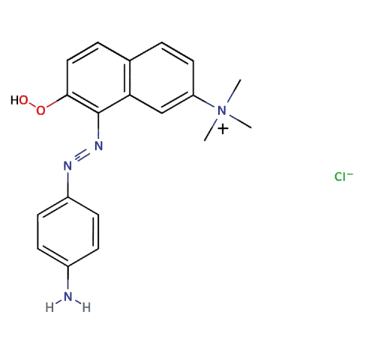
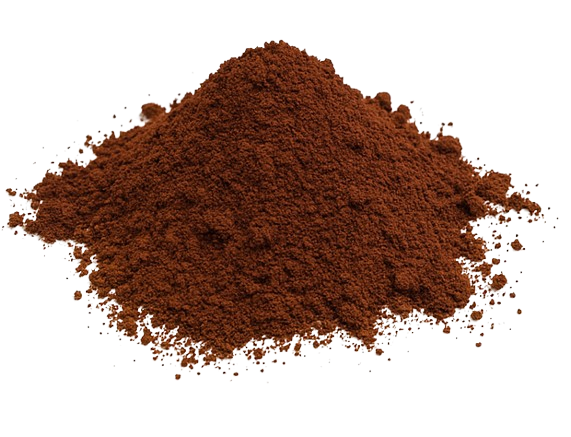
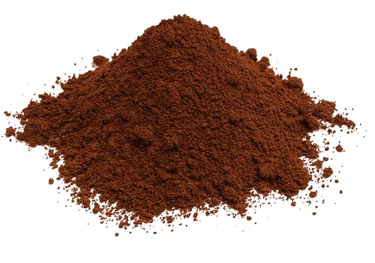
Basic Brown 16 is a synthetic cationic dye belonging to the category of basic (or positively charged) dyes, commonly used for coloring textiles, paper, and biological stains. It typically appears as a dark brown powder that is soluble in water, forming a vivid brown solution. Its molecular structure includes aromatic rings and amino groups that allow it to bind effectively to negatively charged surfaces, such as wool, silk, and certain cell structures in histology. The dye exhibits strong staining properties and good lightfastness, making it useful in both industrial applications and laboratory techniques, such as microscopy for staining tissues. While generally stable, Basic Brown 16 can be sensitive to high temperatures and extreme pH levels, which may affect its color intensity. Additionally, due to its chemical composition, handling the dye requires standard safety precautions to avoid skin or eye irritation, and its environmental disposal must be managed carefully to prevent contamination.
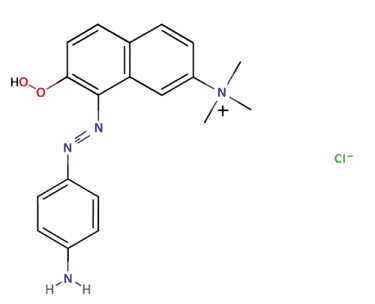
Chemical Structure of Basic Brown 16
Appearance of Basic Brown 16
Uses
1. Textile Industry
Packing
Export Worthy packing 5 Kg Drum, 25 Kg Drum, 50 Kg Drum.
Storage Conditions
Store in cool and dry place at room temperature, protect from direct sunlight.
Molecular Formula
CAS No.
CI No.
IUPAC Name
Synonyms
Molecular Weight
Appearance
Solubility
Dye Content (Spectrophotometry)
C20H22ClN3
26381‑41‑9
42595
[4-(Phenylamino)phenyl][4-(methylamino)phenyl]methylium chloride
1,1’-Dimethyl-4,4’-bis(phenylamino)phenylmethylium chloride
339.86 g/mol
Dark brown to reddish-brown water-soluble crystalline powder.
Soluble in water
98%
:
:
:
:
:
:
:
:
:
Dyeing of Wool and Silk:
Basic Brown 16 is excellent for dyeing protein fibers like wool and silk because these fibers have negatively charged groups (like carboxyl groups) that attract the positively charged dye molecules.
Produces brown to reddish-brown shades depending on concentration.
Often used for uniform coloring in garments, fabrics, and decorative textiles.
Dyeing of Synthetic Fibers:
Some synthetic fibers like acrylics can also take up basic dyes. The dye penetrates the fiber and creates bright, even colors.
Printing on Textiles:
Used in textile printing pastes to create patterns and designs with brown shades.
2. Leather Industry
Leather Coloring:
Basic Brown 16 is used to stain leather in a consistent brown shade. It binds to the collagen in leather, giving it uniform color.
Commonly used in shoe leather, belts, and bags.
Can be combined with other dyes for shade adjustment.
3. Biological Staining
Microscopy and Histology:
Basic Brown 16 is sometimes used as a biological stain. Its positive charge allows it to bind to negatively charged cellular components.
Can highlight cell nuclei or cytoplasm depending on formulation.
Often part of dye mixtures for special staining protocols.
4. Paper Industry
Paper Coloring:
Can be used to color paper and cardboard in brown tones.
Provides bright, even color.
Often used in wrapping papers or artistic papers.
5. Ink and Paint Industry
Ink Production:
Basic Brown 16 is used in some printing inks because it gives a stable, bright brown color.
Can be water-based or alcohol-based inks.
Paints and Dyes for Art:
Sometimes incorporated in paints or craft dyes for artistic applications.
6. Chemical Properties That Enable Its Use
Water Soluble: Makes it easy to apply in aqueous solutions.
Cationic Nature: Allows strong binding to anionic substrates.
Shade Range: Can produce different browns depending on concentration and pH.
:
Contact
Reach out for inquiries and partnerships.
Follow
Connect
© 2008-2025, All Rights reserved by MODASA Pharmaceuticals Pvt. Ltd.