Basic Orange 31
Description
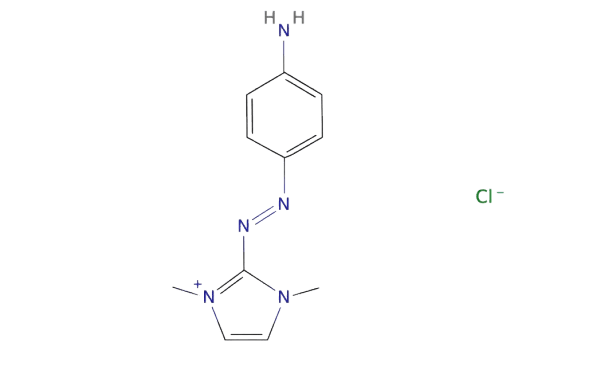
Basic Orange 31 is a synthetic cationic (basic) dye commonly used in textile, paper, leather, and biological staining applications. Known for its bright orange hue, it belongs to the class of azo dyes, which contain one or more azo (–N=N–) chromophore groups responsible for their vivid coloration. Basic Orange 31 exhibits high affinity toward materials with acidic or anionic sites, such as acrylic fibers and some modified cellulose substrates, allowing strong and uniform coloration. The dye is typically soluble in water, forming intensely colored solutions, and is often applied under mildly acidic conditions to enhance uptake. Like many basic dyes, it may show limited lightfastness on certain substrates but provides excellent brightness and color intensity. Safety considerations include handling it carefully to avoid inhalation or skin contact, as some synthetic dyes may pose irritation or environmental concerns when released untreated into wastewater.
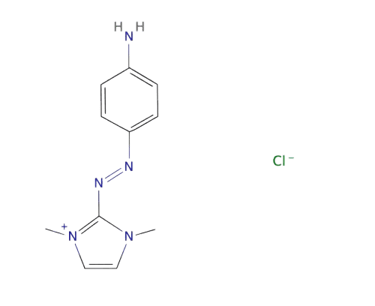
Chemical Structure of Basic Orange 31
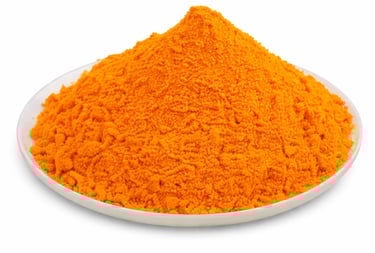
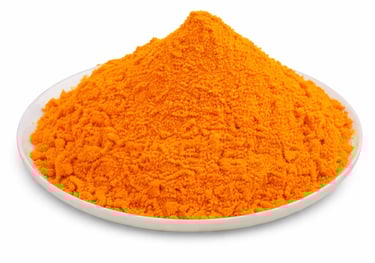
Appearance of Basic Orange 31
Uses
1. Hair Dye / Cosmetic Applications
Packing
Export Worthy packing 5 Kg Drum, 25 Kg Drum, 50 Kg Drum.
Storage Conditions
Store in cool and dry place at room temperature, protect from direct sunlight.
Molecular Formula
CAS No.
IUPAC Name
Synonyms
Molecular Weight
Appearance
Solubility
Dye Content (Spectrophotometry)
C₁₁H₁₄N₅Cl
97404-02-9
2-[(4-aminophenyl)azo]-1,3-dimethyl-1H-imidazolium chloride
4-[(1,3-dimethylimidazol-1-ium-2-yl)diazenyl]aniline; chloride
51.72 g/mol
Basic Orange 31 is typically an orange to dark-orange crystalline powder.
98%
:
:
:
:
:
:
:
:
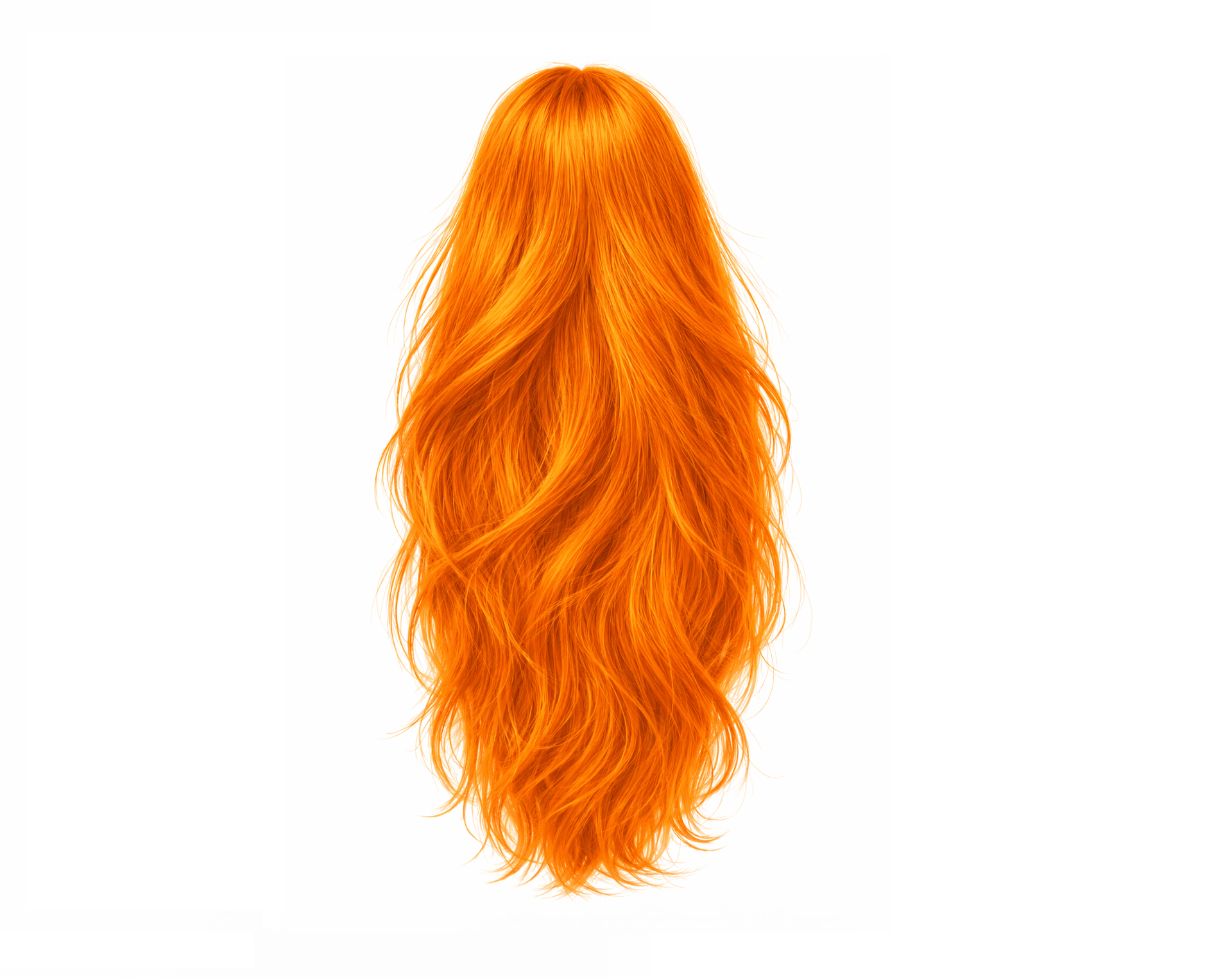
Basic Orange 31 is widely used in hair-color formulations.
Its cationic structure (positively charged) allows it to bind well to the hair shaft, which often carries negative charges (especially after chemical treatment).
Because it has high tinctorial strength (meaning a little dye gives strong color), it's efficient: small amounts can yield a vivid orange shade.
It is used in different types of hair-color products: permanent dyes, semi-permanent, and even in conditioning-based formulas.
Advantage: good color retention (“color fastness”) so the orange shade doesn't wash out too quickly.
Safety / handling: Because it’s a dye, formulators must consider skin irritation, regulatory limits, and purity (especially for cosmetic grade). Basic Orange 31 has hazard statements (skin irritation, possible allergic reaction, eye damage, aquatic toxicity).
2. Textile Dyeing
This dye is used in the textile industry, particularly to color synthetic fabrics.
Basic dyes as a class (which includes Basic Orange 31) are especially good for acrylic fibers, which have negatively charged sites that attract the cationic dye molecules.
Because of its strong color strength, it can produce very bright orange shades.
With proper dyeing conditions (e.g., control of pH, temperature, auxiliaries), decent wash- and light-fastness can be achieved.
3. Paper Coloring
In the paper industry, Basic Orange 31 is used to impart bright orange coloration.
Because paper (cellulose fibers) often has anionic (negatively charged) regions, the cationic dye molecules adhere well, giving uniform coloration.
It is soluble in water, which makes it relatively easy to incorporate into the pulp or apply during the paper manufacturing process.
Use-cases include decorative paper, stationery, packaging papers, or specialty coated papers.
soluble in water and alcohol.
4. Potential Use in Leather
While not as explicitly documented for Basic Orange 31 in every source, basic (cationic) dyes in general are used in leather dyeing, because they can bind to leather without needing a mordant (a fixing agent).
The advantage is that the dyeing process can be simpler, and basic dyes can produce bright, vivid shades on leather.
5. Industrial & Research Uses
Beyond commercial coloring, Basic Orange 31 could be used in specialty chemical formulations — for example, in research labs working with dyes, or in materials science where a strong cationic dye is needed. (While specific academic staining protocols for Basic Orange 31 are less widely cited, its chemical structure makes it potentially useful for custom applications.)
Because of its molecular structure (an azo dye with imidazolium), there might be niche applications in dye-sensitized systems, though such uses would depend heavily on the chemistry context and are less standard.
Why Useful in These Applications
Cationic Charge: The positive charge helps it bind strongly to negatively charged sites (fibers, hair, paper).
Azo Chromophore: The –N=N– group gives strong color (because of its conjugated system), resulting in vivid orange.
Solubility in Water: Facilitates easy preparation of dye baths or solutions for various manufacturing processes.
High Tinctorial Strength: More efficient usage, cost-effective because lower amounts needed for visible coloration.
Versatility: Because it works on synthetic fibers (textiles), biological materials (hair), and paper, it's quite versatile.
Limitations / Challenges / Safety Considerations
Toxicity: According to supplier safety data, Basic Orange 31 can irritate skin and eyes; it may also cause allergic reactions.
Environmental Impact: Like many synthetic dyes, if released into wastewater without proper treatment, it could pose ecological risk (especially because dyes can be persistent and toxic to aquatic life).
Fastness Limits: While basic dyes can have good fastness, they may not always match the light- or wash-fastness of more specialized reactive or vat dyes, depending on substrate and process.
Regulatory Constraints (Cosmetics): For hair dyes, regulatory approval and safety testing are required; not all grades may be suitable for cosmetic or personal-care use without rigorous quality control.
Cost / Procurement: Industrial users need reliable, high-purity sources; cheaper or impure dye could lead to variation in shade, or problems in application.
Contact
Reach out for inquiries and partnerships.
Follow
Connect
© 2008-2025, All Rights reserved by MODASA Pharmaceuticals Pvt. Ltd.